
Preventing Flat Roof Ponding Water During High-Volume Torrential Storms

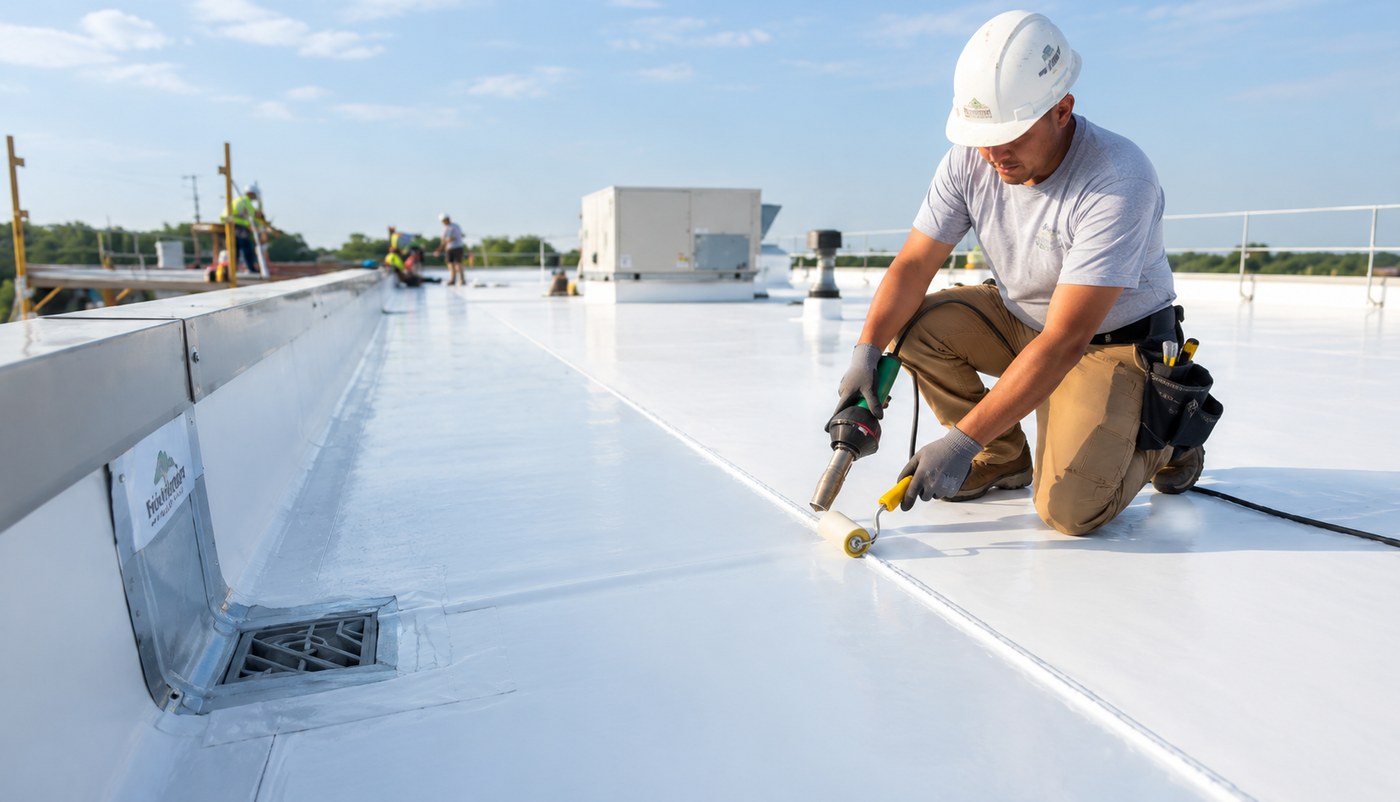
Engineering solutions for managing excessive stormwater accumulation on low-slope and flat roofing systems: tapered insulation layouts, properly positioned primary drains, sump design, overflow scuppers, and engineered drainage pathways.
During high-volume torrential storms, flat roofs can experience rapid water accumulation when drainage systems cannot discharge rainfall quickly enough. Inadequate slope, undersized drains, blocked outlets, and insufficient secondary drainage can increase the risk of ponding, membrane deterioration, structural loading, and premature roof-system failure.
Effective ponding prevention begins with designing the roof assembly to direct water toward designated drainage points. Tapered polyiso insulation can be strategically configured to create positive drainage slopes without significantly increasing the overall roof assembly height. Crickets, saddles, and tapered saddles can also be incorporated around drains, curbs, and other roof penetrations to eliminate areas where water may otherwise remain trapped.
Primary roof drains should be positioned at engineered low points and sized according to anticipated rainfall intensity and drainage area. Where high-volume storm events are expected, sump areas around drains can improve water collection and reduce the likelihood of standing water across the membrane surface.
Secondary drainage is equally important. Overflow scuppers and secondary drains provide an additional discharge path if the primary drainage system becomes obstructed or overwhelmed. Their elevation and capacity should be coordinated with the roof design so that excess water is safely redirected before it reaches a level that could create excessive structural loading.
For large commercial and industrial buildings, drainage performance should be evaluated using the roof’s contributing area, local rainfall intensity, drain capacity, overflow requirements, and existing structural conditions. Computational drainage analysis and field verification can help identify low points and determine where additional drainage improvements are required.
A properly engineered flat-roof drainage strategy combines positive slope, strategically designed tapered insulation, adequately sized primary drains, sump areas, and reliable secondary overflow systems. These measures help maintain positive drainage during extreme rainfall and reduce the long-term risks associated with persistent ponding water.